March 29-31, 2027
CWRU Tinkham Veale Center
Cleveland, Ohio
CWRU Tinkham Veale Center
Cleveland, Ohio
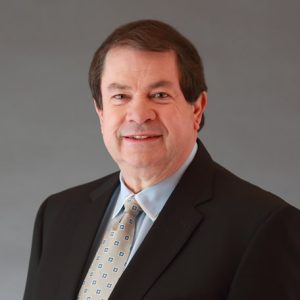
By Terry Boston, former CEO of PJM, Chair of HVDC AMERICA
The U.S. transmission grid was not built for the level of demand it is now being asked to
serve to ensure we win the AI race. Loads are arriving in gigawatt sizes, not megawatts
like in the past. The industry has spent 140 years building the grid we have today, but all
signs and DOE studies argue we need to double it in the next 10 years. The way grid
transfer capacity has traditionally been added will not solve the problem. The only way
to meet this challenge and stay dominant on the global stage is by upgrading existing
corridors and using other long rights-of-ways (ROWs) to operate as HVDC. HVDC
carries up to three times more power on the same physical lines as AC. DC
controllability also increases the through-put of the underlying AC network. There is a
practical and realistic way for our nation to move forward. It will deliver gigawatts,
speed to power, that is grounded in engineering principles transmission owners manage
every day – it is called HVDC AMERICA!
HVDC AMERICA, an engineering discipline focused on upgrading existing transmission
corridors in a way that HVDC can be planned, permitted, financed, and operated with
confidence.
According to the Wall Street Journal December 10, 2025, China generates more than
twice the electricity of the US and in the last 14 years has increased their capacity more
than the rest of the world combined. I have visited a 1,100-kilometer HVDC line and its
3,000 MW converter station that was built in 1 year in Guangzhou, China. Europe and
China have eighteen times as many long HVDC lines as the U.S. We in the US can
spend decades trying to acquire rights-of-way for new transmission lines, losing the AI
race, and falling behind as a nation, or we can finally get practical about the solution
that is right under our nose.
The impacts are easier to see when the discussion stays in gigawatts and in years.
When delivery of that capacity is delayed by eight to ten years while waiting on
greenfield rights-of-way, those losses compound into tens of billions of dollars before
construction begins. We could build HVDC right next to or on the existing AC
transmission towers, or upgrade insulators on an existing line tripling capacity and
recoup the cost years before a greenfield AC corridor is through permitting.
Speed to power pays for itself when time and risk of losing the AI race is priced
honestly. With more than two hundred thousand miles of high-voltage transmission at or
above 230 kV in the United States, there are thousands of existing segments where
AC to-HVDC conversion could unlock multi-gigawatt capacity within the ROWs already in place.
Terry Boston retired in December 2015 after serving eight years as CEO of PJM Interconnection, the
largest power grid in North America and the largest electricity market in the world. He currently is
President of Terry Boston LLC, serves on the Board of the Grid Protection Alliance as Vice Chair, ,
and on the Corporate Board of Dewberry Engineering where he chairs the Audit Committee, and is
a board advisor to Acelerex, OmniPower, and recently did a risk assessment of the Saudia
Electricity Co. in Saudia Arabia. He is a 2017 U.S. Presidential Appointee to the National
Infrastructure Advisory Council and has served under three U.S. presidents. He was appointed by
the White House to the Transformation Advisory Council for the Puerto Rico Electric Power
Authority after Hurricanes Irma and Maria.
Mr. Boston previously served as the 130th President of the Association of Edison Illuminating
Companies and is a former President of GO 15, the world’s largest power grid operators that serve
3.5 billion people. He was also a Vice President of the International Council of Large Electric
Systems for the United States and an advisor to the U.S. National Academy, U.K. Royal Academy,
and the MIT Energy Storage Committees.
Mr. Boston is a Founder and the first Board Chair of the North American Transmission Forum,
dedicated to excellence in performance and sharing industry best practices. He was one of the
eight industry experts selected to direct the North American Electric Reliability Corporation (NERC)
investigation into the August 2003 Northeast/Midwest blackout and published an Institute of
Electrical and Electronics Engineers (IEEE) paper on the lessons learned 20 years after the event.
He served three years as Chair of the Southeastern Electric Reliability Council Board and has
served on the boards of nonprofits such as the Electric Power Research Institute (EPRI) and the
Grid Protection Alliance. He previously served on the NERC Board and was elected by his peers to
the NERC Members Representative Committee.
In 2014, Mr. Boston was elected to the National Academy of Engineering (NAE), one of the highest
professional honors accorded to an engineer and has served on 5 Boards and committees to
provide advice to the U.S. Government on issues such as national security and infrastructure. He
has also served as Chair of the NAE member selection committee for Power Engineering.
Mr. Boston was honored with the 2011 Leadership in Power Award by the IEEE Power and Energy
Society. He led PJM to win Platts Global Energy Awards for Industry Leadership and Excellence in
Electricity. In December 2015, he was selected unanimously as the recipient of the Global Energy
Lifetime Achievement Award.
Prior to joining PJM, Mr. Boston was the Executive Vice President of the Tennessee Valley Authority,
the nation’s largest public power provider. During his 35 years at Tennessee Valley Authority, he
directed divisions in transmission and power operations, pricing and contracts, and electric
system reliability. Mr. Boston holds a BS in engineering from Tennessee Technological University
and an MS in engineering administration from the University of Tenness
